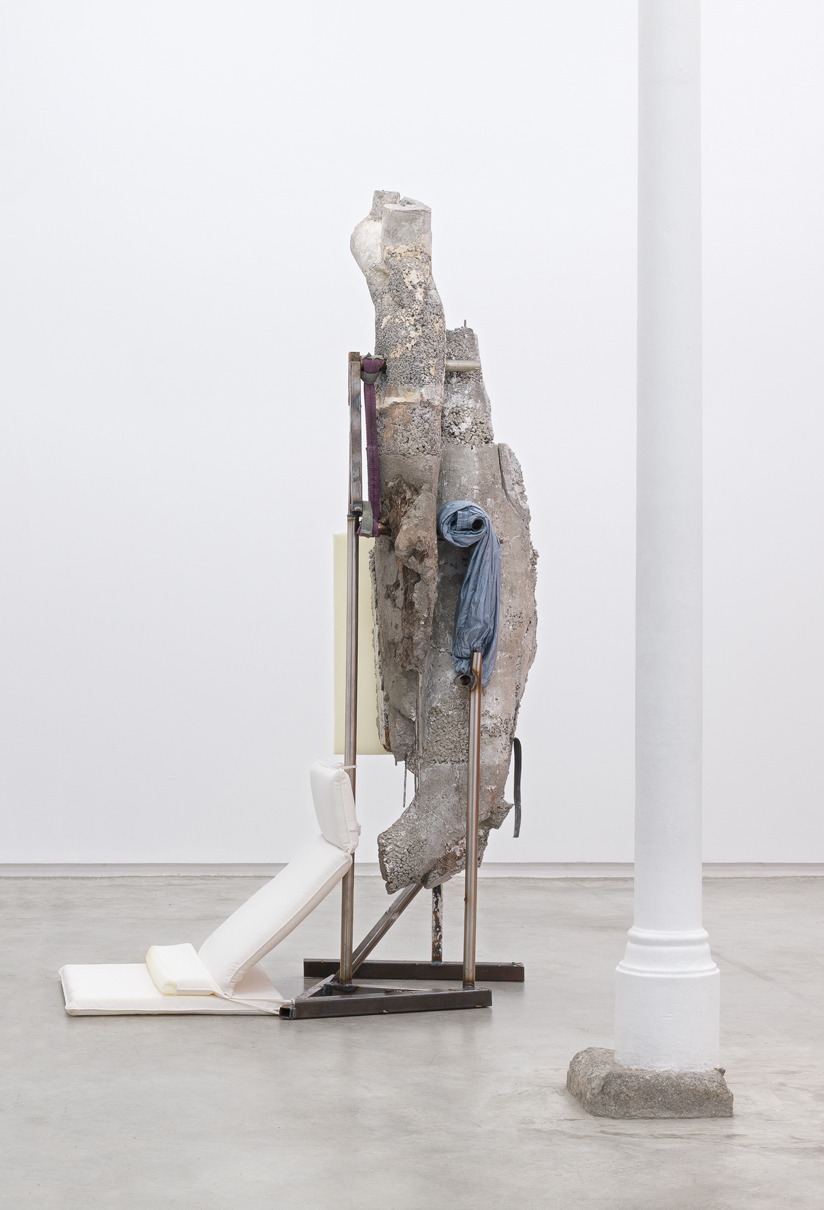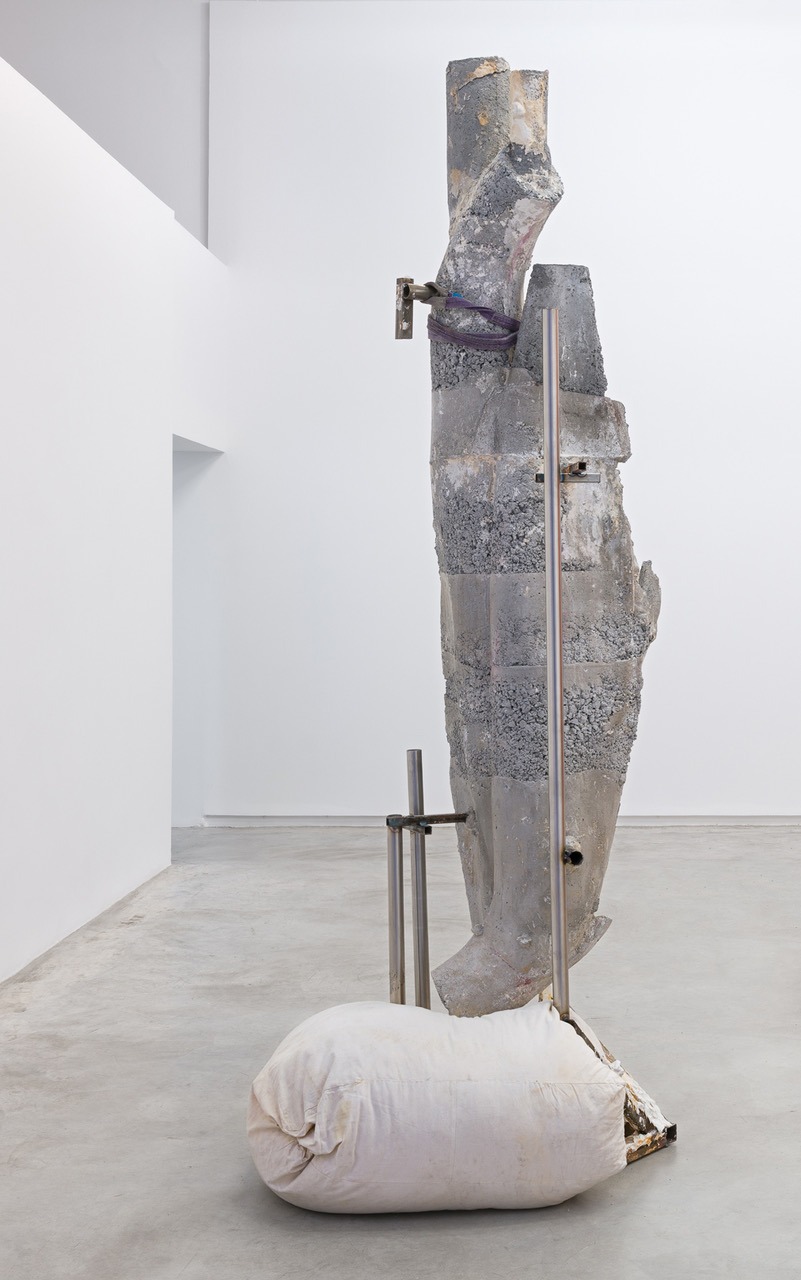
Catapulta and ARCOmadrid celebrated the first edition of the Catapulta Acquisition Award, in collaboration with the National Gallery of Canada.
This award was created with the aim of promoting the acquisition of works by Spanish artists for inclusion in internationally renowned museum collections, through a co-financing format.
Artist June Crespo is the winner of the 1st Catapulta Acquisition Award. The Canadian museum selected the works The Dancing Column (I) and The Dancing Column (II) (2025), presented at the fair by the Ehrhardt Flórez gallery, which will become part of its permanent collection.
June Crespo (Pamplona, 1982) lives and works in Bilbao. Her work exists somewhere between the surrealist found object and the logic of the bricoleur described by Lévi-Strauss: an affective and associative gesture toward materials collected and extracted from systems of production and consumption. The joining or assemblage of these elements generates new relationships that produce various forms of estrangement, appropriation, and recontextualization.
Her most recent solo exhibitions include: Danzante, Secession, Vienna (2025); Rose Traction, Le Crédac, Ivry-sur-Seine (2025); SOLAR, Ehrhardt Flórez Gallery, Madrid (2025); No viene a nuestros labios, Pols, Valencia (2025); Vascular, Guggenheim Museum Bilbao (2024); Their Weft, the Grass, 1646, The Hague (2024); Vieron su casa hacerse campo, CA2M, Madrid (2023).
The work was selected by Josée Drouin-Brisebois, Director of National Outreach at the National Gallery of Canada. An art historian with a Master’s degree in Art History from the Université de Montréal and a Bachelor of Fine Arts from the University of Ottawa, Drouin-Brisebois has developed a distinguished curatorial career at the National Gallery of Canada, where she previously served as Senior Curator of Contemporary Art. She has curated major international projects and has led Canada’s participation in several editions of the Venice Biennale.
Founded in 1880, the National Gallery of Canada is one of the most respected art institutions in the world. As the country’s national museum, it is mandated to develop, preserve, and present its collection for the learning and enjoyment of all generations. It houses more than 90,000 works, including one of the most significant collections of Indigenous, contemporary, and Canadian art, as well as important works from the 14th to the 21st centuries, in addition to extensive library and archival holdings.